

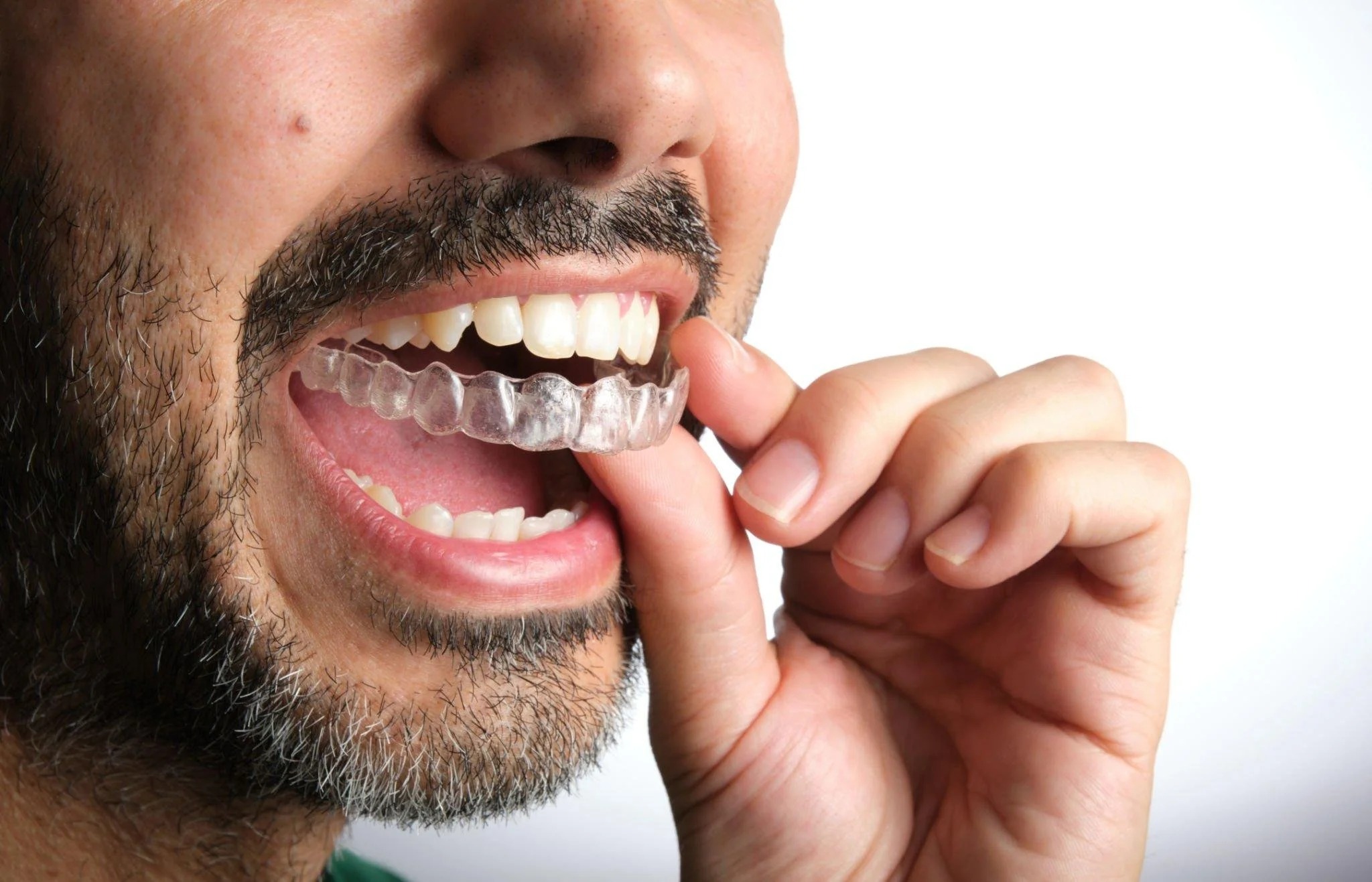
Invisalign has become one of the most recognized names in dentistry, and for good reason. Over the past two decades, it has transformed orthodontic treatment for millions of patients worldwide, offering a discreet, comfortable, and removable alternative to traditional metal braces that fits naturally into adult and teen lifestyles in ways that fixed appliances simply cannot.
Table of Contents
But the widespread recognition of the Invisalign brand has also created a layer of confusion about what the treatment can actually achieve. Some patients arrive at consultations expecting clear aligners to fix concerns that fall outside the scope of what Invisalign can address effectively. Others dismiss Invisalign as a solution for minor cases only. They are not realizing that the technology has advanced significantly and can now handle a much broader range of clinical situations than it could even five years ago.
Patients across Agoura Hills, Calabasas, Westlake Village, Thousand Oaks, Oak Park, Hidden Hills, Newbury Park, Bell Canyon, and Lake Sherwood considering Invisalign in Agoura Hills deserve a clear, honest, and clinically accurate overview of what the treatment can and cannot do before they commit to anything. That is exactly what this guide provides.
What Invisalign Can Fix
Modern Invisalign technology has expanded the range of treatable conditions considerably since the system was first introduced. Here is a comprehensive look at what Invisalign can address effectively in the hands of an experienced provider.
Crowded Teeth
Crowding occurs when there is not enough space in the jaw for all the teeth to sit in their correct positions. Mild to moderate crowding is one of the most common reasons patients seek orthodontic treatment. Also, one of the conditions Invisalign handles most predictably. The aligners gradually create space and shift crowded teeth into better positions, improving both the appearance and the cleanability of the smile.
Severe crowding with significant space deficiencies may require more complex treatment planning. Sometimes, in combination with other procedures like interproximal reduction or extractions, mild to moderate cases are well within Invisalign’s capabilities.
Gapped Teeth
Spaces and gaps between teeth are another common concern that Invisalign addresses well. Whether the gap is between the two front teeth or distributed across multiple teeth in the arch, the aligners can close these spaces predictably for most patients. The degree of improvement depends on the size of the gaps and the underlying cause, but for the majority of patients with spacing concerns, Invisalign delivers reliable results.

Overbite
An overbite occurs when the upper front teeth overlap the lower front teeth excessively in a vertical direction. Mild to moderate overbites are treatable with Invisalign, often using a combination of aligner movements and precision bite ramps built into the aligners to gradually reduce the overlap. Severe overbites may require additional orthodontic or surgical intervention beyond what aligners alone can achieve.
Underbite
An underbite is the opposite situation, where the lower teeth sit in front of the upper teeth when the mouth is closed. Mild underbites can be addressed with Invisalign. Though moderate to severe cases often require a combined approach or surgical correction, depending on whether the issue is dental or skeletal in origin. A thorough clinical assessment determines which approach is appropriate for each individual case.
Crossbite
A crossbite occurs when some upper teeth sit inside the lower teeth rather than outside them. It can affect the front teeth, the back teeth, or both. Invisalign can treat many crossbite cases effectively, particularly those that are dental in origin rather than skeletal. The aligners shift the affected teeth into correct alignment with the opposing arch, improving both function and appearance.
Open Bite
An open bite is a condition where the front teeth don’t come together when the mouth is closed, leaving a visible gap between the upper and lower front teeth. It can affect speech, chewing function, and appearance significantly. Open bites were historically considered challenging for clear aligner therapy. But advances in Invisalign technology have made many cases increasingly treatable with aligners, particularly when the cause is dental rather than skeletal.
Mild to Moderate Misalignment
Beyond these specific bite issues, Invisalign is highly effective at addressing general misalignment of individual teeth, rotations, tilts, and teeth that have shifted out of position over time. This includes orthodontic relapse in patients who previously had braces and have seen their results shift due to inconsistent retainer use.
Here is a summary of what Invisalign can treat:
- Mild to moderate crowding
- Gaps and spaces between teeth
- Mild to moderate overbite
- Mild underbite
- Dental crossbite
- Open bite in many cases
- General tooth misalignment and rotations
- Orthodontic relapse after previous treatment

Take the first step toward a beautifully aligned smile. Schedule your Invisalign consultation today.
What Invisalign Cannot Fix
Being equally clear about the limitations of Invisalign is just as important as understanding what it can achieve. Clear aligners are a powerful orthodontic tool, but they are not the right solution for every clinical situation.
Severe Skeletal Discrepancies
When bite problems are caused by the underlying skeletal structure of the jaw rather than the position of the teeth alone, Invisalign cannot correct them on its own. Severe overbites, underbites, and crossbites that originate in jaw development rather than tooth positioning often require orthognathic surgery in combination with orthodontic treatment. A thorough clinical assessment, including 3D imaging and bite analysis, identifies whether a patient’s concern is dental or skeletal in origin.
Severely Rotated Teeth
While Invisalign handles many rotations well, severely rotated teeth, particularly round teeth like premolars that have limited surface area for the aligner to grip, can be challenging to move predictably with aligners alone. Traditional braces provide a more reliable mechanical advantage for certain types of rotation that aligners struggle to replicate with the same degree of predictability.
Large Vertical Movements
Moving teeth significantly in a vertical direction, either intruding teeth that have over-erupted or extruding teeth that haven’t fully erupted, is technically possible with Invisalign but is one of the more challenging movements for clear aligners to achieve reliably. Cases requiring substantial vertical tooth movement may be better served by traditional braces or a combination approach.
Significant Spacing With Multiple Missing Teeth
Invisalign is designed to move existing teeth, not to compensate for significant structural gaps created by multiple missing teeth. Patients with several missing teeth who need space management or complex arch reconstruction require a more comprehensive treatment plan that may involve dental implants, bridges, or other restorative solutions alongside or instead of orthodontic treatment.
Replacing Restorative or Cosmetic Work
Invisalign addresses tooth position, not tooth appearance. Patients who want to fix discoloration, chips, irregular shapes, or worn enamel need cosmetic treatments like professional teeth whitening, porcelain veneers, or bonding either instead of or alongside their Invisalign treatment. Understanding which concerns Invisalign addresses and which require a different solution is an important part of building a treatment plan that fully achieves the patient’s goals.
Why Provider Experience Determines Outcomes
Understanding what Invisalign can and cannot fix is important. But equally important is understanding that the boundary between treatable and not treatable is not always a hard line. Many cases that sit at the edge of Invisalign’s capabilities can be treated successfully with clear aligners in the hands of an experienced Premier Invisalign provider who knows how to use attachments, precision cuts, and refinements to push the limits of what the system can achieve.
A less experienced provider may look at a moderately complex case and recommend traditional braces because they don’t have the depth of experience to plan and execute the Invisalign approach with confidence. An experienced provider who has seen hundreds of diverse cases knows where the genuine limits are and where the technology can be applied creatively to expand them.
This is one of the strongest arguments for choosing a provider based on their Invisalign-specific experience and case volume rather than simply on convenience or price.

FAQs
Can Invisalign fix severe crowding?
Mild to moderate crowding is well within Invisalign’s capabilities. Severe crowding may require additional procedures like interproximal reduction or extractions alongside aligner treatment, or may be better suited to traditional braces depending on the complexity.
Does Invisalign work for bite correction as well as straightening?
Yes. Invisalign can address overbite, underbite, crossbite, and open bite in addition to crowding and spacing. The effectiveness depends on whether the issue is dental or skeletal in origin.
Can Invisalign fix my teeth if I had braces before?
Yes. Orthodontic relapse is one of the most common reasons adult patients seek Invisalign treatment. The shifts that occur over time after previous braces are often less severe than the original misalignment and can frequently be corrected with clear aligners in a shorter timeframe.
What happens if my case is too complex for Invisalign?
An experienced provider will identify this during the consultation and recommend the most appropriate alternative, whether that is traditional braces, a combination approach, or a referral for surgical assessment if a skeletal issue is involved.
How do I know if Invisalign is right for my specific case?
A thorough consultation with an experienced Invisalign provider, including digital scans and a bite assessment, is the most accurate way to determine whether clear aligners are appropriate for your situation and what results you can realistically expect.
Find Out What Invisalign Can Do for Your Smile
The best way to know whether Invisalign is the right solution for your specific concerns is through a proper consultation with an experienced provider who can assess your teeth, bite, and goals honestly. Agoura Advanced Dentistry serves patients across Agoura Hills, Calabasas, Westlake Village, Thousand Oaks, Oak Park, Hidden Hills, Newbury Park, Bell Canyon, and Lake Sherwood.